
Documents in Mason Deed Records
The Mason County Register of Deeds records instruments that affect real property. A deed names parties, land, signatures, and a recording reference. It may state consideration or transfer-tax details. A displayed amount is not always an open-market price. Mortgages and liens describe claims rather than ownership transfers. Releases and discharges show that a recorded claim was later cleared.
| Deed Type | What It Does | Common Use |
|---|---|---|
| Warranty deed | Conveys the stated interest with title promises | Ordinary sale |
| Quitclaim deed | Conveys whatever interest the grantor holds | Family, estate, or title cleanup |
| Trustee or executor deed | Conveys through a trust or estate representative | Trust and probate transfer |
| Sheriff or tax instrument | Records a transfer tied to legal process | Foreclosure or delinquent tax |
| Plat | Records lots, roads, and dedications | Subdivision identity |
Recording gives public notice that an instrument was filed. The office does not guarantee its legal effect. Run the same names and legal description across related mortgages, assignments, releases, lis pendens, and plats. A lis pendens warns that litigation may affect the land.
Mason Deeds Reach 1840
The county online-services notice states that the real-estate index and images cover June 23, 1840 through the present. That start reaches Mason County's formation era. The notice fixes no precise imaging cutover and does not promise that every historic name and image is complete. The county calls it a working index. Errors, omissions, and changes may exist. Save the document number or liber and page, the date, parties, instrument type, and legal description. Counter staff can check a doubtful result. The same official page names both online access modes and repeats the stated date range.
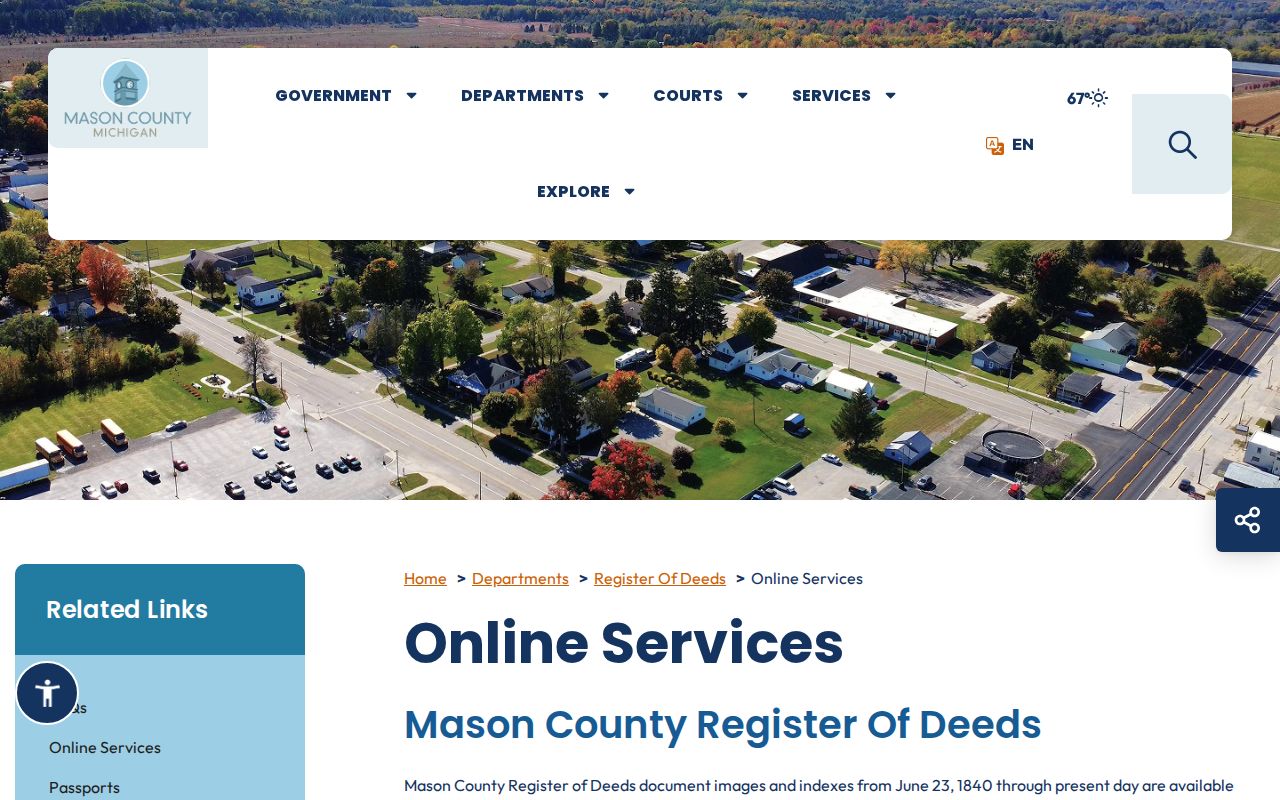
Mason County deed records reach back to 1840. Index content and vendor access can change, so date any search.
Laredo and Tapestry Options
Laredo serves frequent users through account-based subscription access. Tapestry is the pay-as-you-go option for occasional lookups. The public county page posts no complete inventory of search fields or image charges, so confirm those inside the active interface. Laredo's product page reflects that subscription orientation.
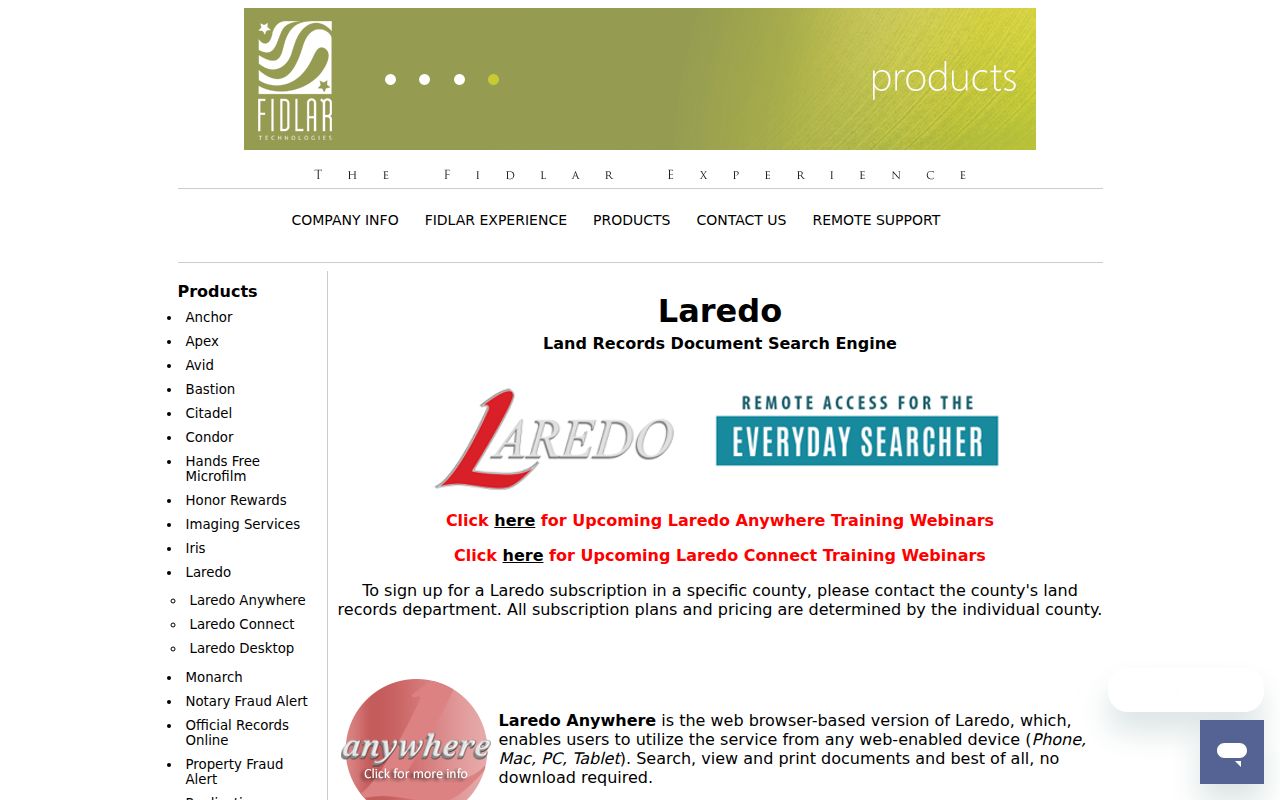
Occasional researchers can instead enter through Tapestry, whose search screen is shown next.

County selection and current search controls need live confirmation. Counter inspection and copy requests at the Register of Deeds remain the fallback when a vendor service fails.
Trace Mason Grantors and Grantees
A grantor transfers an interest. A grantee receives it. Start from the current owner's acquisition deed and treat its grantor as the next name to search backward. Match the legal description at every step, because one person may own several parcels and the same surname runs throughout Mason County deed records.
- Find the current roll name through the Mason property search and copy its exact spelling.
- Search that party as grantee and locate the newest acquisition deed for the same land.
- Read the grantor, recording reference, and legal description from the image.
- Search that grantor as an earlier grantee, checking plats and parent parcels when descriptions change.
- Grantor
- The party transferring the recorded interest.
- Grantee
- The party receiving the recorded interest.
- Chain of title
- The ordered sequence of transfers affecting the same land.
- Liber/page or instrument number
- The recorder's retrieval reference for a filed document.
Mason Splits and Legal Descriptions
A parcel number is a tax-system identifier, and older deeds may instead describe a parent parcel, section acreage, or recorded lot. One LIAA sample carries the note "SPLIT 01/06/2015." Search plats by the deed's land description. The Road Commission map directory lists township easement, subdivision, and site-condominium materials. State LARA subdivision resources add final-plat review access. Maps support the chain. The recorded plat and deed supply its documentary links.
Mason Deed Copy Fees
The county fee schedule lists $30 to record an instrument, $1 per page for copies, and $5 for certification. Name searches, lien certificates, and plats cost extra. Verify the current schedule before ordering. A plain copy suits routine deed research. A certified copy carries the recorder's seal. Choose certification when a formal request needs official evidence, and use the counter when the web index falters or an old entry looks incomplete. Michigan recording requirements also cover paper, margins, drafter information, signatures, tax certification, and Social Security number masking.
Mason Property Fraud Alerts
The county offers free Property Fraud Alert enrollment. Participants select Mason County and register names to watch. An alert notice can help an owner of record investigate an unexpected deed or lien promptly.
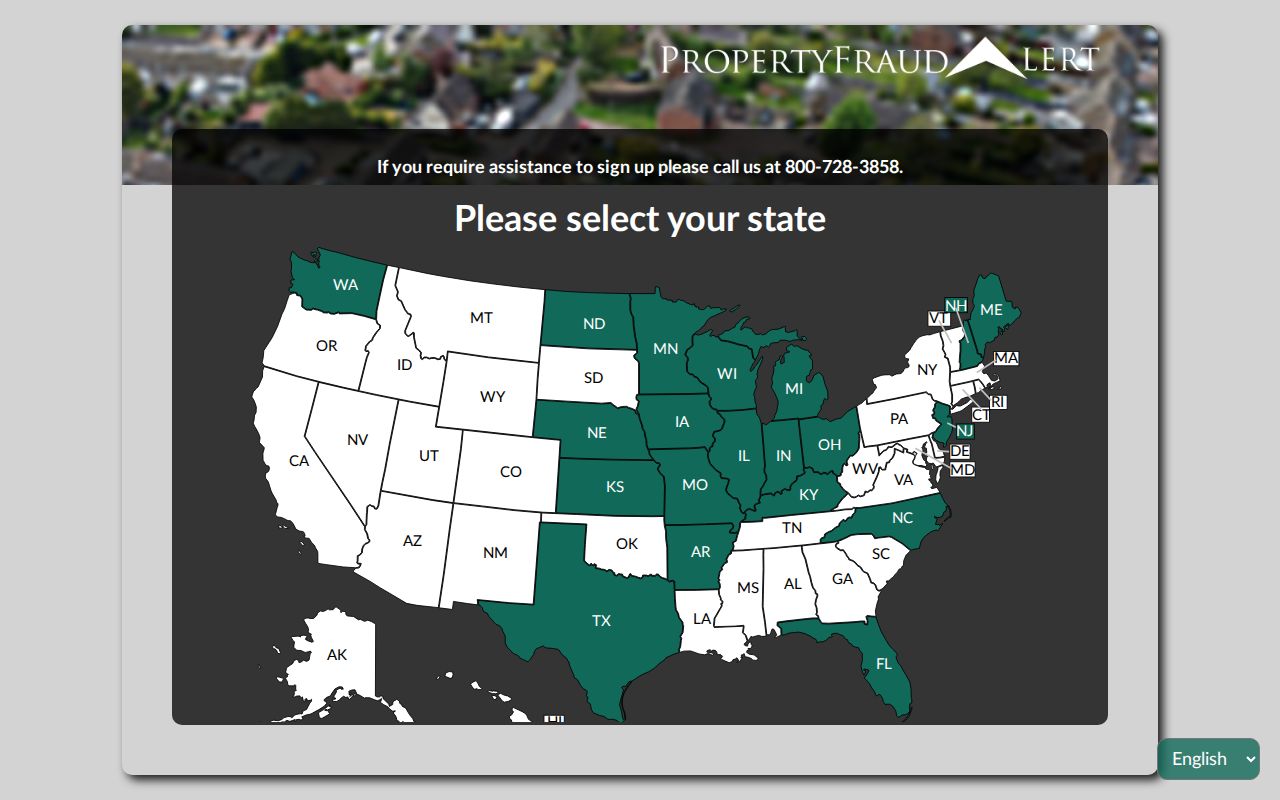
Enrollment begins by selecting Mason County. An alert never stops a filing, repairs an old index, or certifies title, so verify any notice with the Register of Deeds.
Historic Mason Deed Research
The online index reaches Mason County's formation era, but the oldest images and name entries still benefit from counter review. The Historical Society Research Center identifies plat maps and property-related collections. Its Library of Michigan guide adds directories, maps, newspapers, and an unusual early-landowner reference. Ludington's 1881 fire destroyed much of the town. The original library collection burned too. That does not prove courthouse deed books burned. No official Mason deed-loss event appears in the county's own accounts, so treat a missing hit as a clue rather than a gap. Try alternate spellings and plats first.
Mason Deed Search Cross-Checks
Compare every deed result with the parcel card's legal description, jurisdiction, and split notes. A $0 sale row shows the trap. Read the instrument before calling any amount market value. Probate, foreclosure, or quiet-title court records may explain a gap in the chain. Match the court file to the deed.
Ordering by mail or at the counter goes smoothly when the details travel with you. Bring the full instrument reference, every party name, the recording date, and the legal description. Ask whether a plain copy will do. Confirm the current fee before paying. Note the source date as well. These details help staff separate similarly named parties. They also keep an address change from derailing the search.
Property Fraud Alert works best beside periodic deed-index review, not instead of it. Register the name forms actually used on recorded instruments. Include trustee or entity styling where applicable. If a notice arrives, save its date and matching name. Locate the new recording reference and obtain the instrument from the recorder. A same-name alert can concern another parcel or person, and silence never proves ownership is clean.
A complete Mason deed abstract records more than names. Note the instrument type and recording date for each relevant hit. Add the document number or liber and page. Also add grantor, grantee, legal description, consideration language, image status, and any releases or assignments. Compare the land description word for word. A shared surname or matching street address is not enough when a party owned several parcels.
Pair each mortgage or lien with its later release, discharge, or assignment. A lis pendens flags litigation. Preserve its court reference. Then check the official case source. Probate or foreclosure can explain why the apparent grantor differs from the prior roll owner. None of this replaces the conveyance that actually describes the transferred interest.
A new parcel number can fail against older deed records. Search the parent legal description and the recorded plat instead. The sample LIAA card's 2015 split note shows exactly this problem. Lot and block language, section-township-range text, metes-and-bounds calls, and named additions can survive an APN change. Mason Historical Society map titles can supply the bridge. So can Road Commission subdivision maps and Register of Deeds plats. Save each source title and date, then return to the recorder's official instrument reference.
Michigan recording rules explain many rejected or difficult filings. County instructions address document margins and paper. They also cover drafter identification, signatures, tax certification, and masking of Social Security numbers. Acceptance means the instrument met the recording requirements presented to the office. It does not mean the recorder investigated every legal interest. Nor does it guarantee that the grantor held valid title.
At the counter, ask staff to verify an uncertain spelling. They can also check a recording reference against the source index. Keep the copy with your search terms and inspection date. Another researcher can then retrace the same deed record.
Order a Mason Deed Copy
Save the complete recording reference from the online index before requesting anything. Inspect the image itself. Check the names, signatures, legal description, and stamp. For a county-issued copy, contact or visit the Mason County Register of Deeds. A mail request should list the parties, the approximate date, the instrument type, and the exact reference when known. Confirm payment and return-copy terms before sending.
Older or uncertain trails have other options. The Mason County Historical Society Research Center, the Library of Michigan Mason guide, and Archives of Michigan finding aids help with historic names, plats, directories, and court context. Historic plats and directories often appear there. These sources never replace a recorder-issued copy.
Recorded, not guaranteed. Mason County deed records show filed instruments, but the working index is not a title opinion and cannot rule out unrecorded interests.